🔰 BEGINNER LEVEL: EQ Basics
What is Equalization?
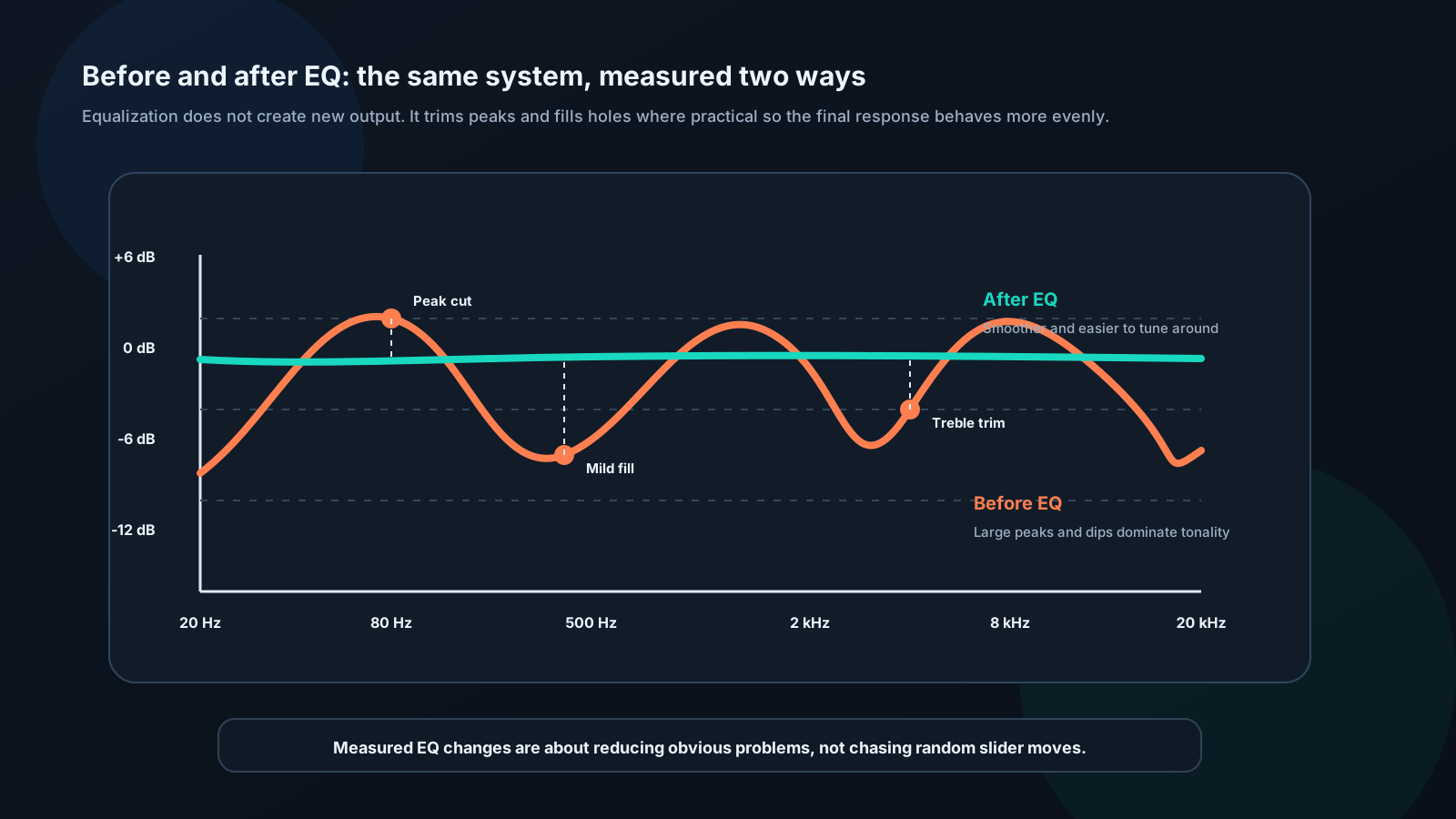
Equalization (EQ) = Adjusting volume of specific frequencies.
Why use EQ: - Fix peaks and dips in response - Adjust to personal taste - Compensate for cabin acoustics - Match to music genre
Types of EQ:
Graphic EQ: - Fixed frequency bands (sliders) - Common: 5-band, 7-band, 13-band, 31-band - Easy to use - Less precise
Parametric EQ: - Adjustable frequency - Adjustable bandwidth (Q) - Adjustable gain - More flexible - Professional choice
Using Basic EQ
Bass, Mid, Treble Controls:
Simplest EQ - three bands.
Bass: ~100 Hz - Increase: More boom, impact - Decrease: Tighter, controlled
Midrange: ~1000 Hz
- Increase: Forward vocals
- Decrease: Recessed vocals
Treble: ~10,000 Hz - Increase: More sparkle, detail - Decrease: Smooth, less harsh
Guidelines: - Small adjustments (±3 dB) - Cutting better than boosting - Listen at normal volume - Use multiple tracks to test
What is Time Alignment?
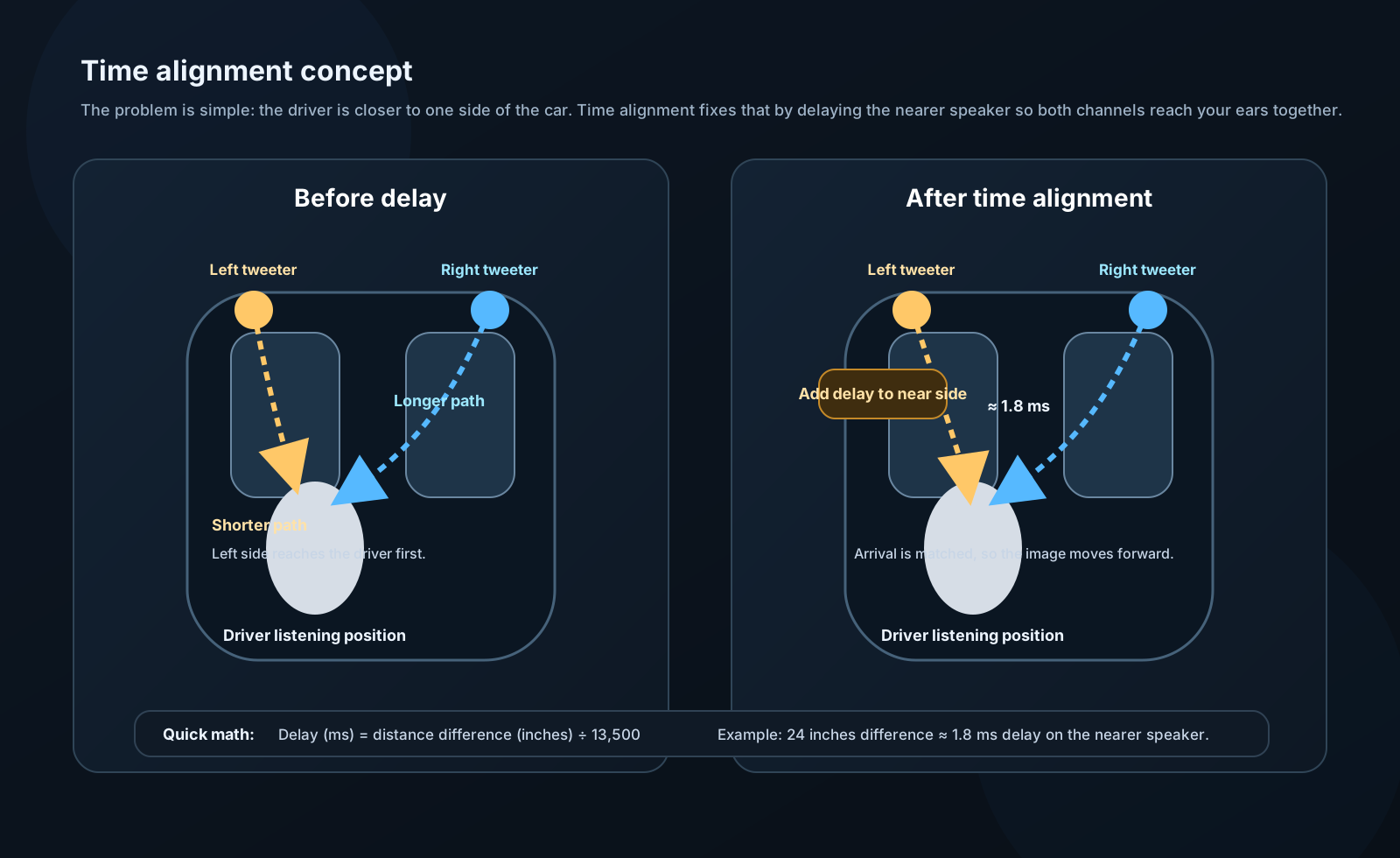
Time alignment = Delaying speakers so sound arrives simultaneously at listener.
Why needed:
Your ears are different distances from each speaker: - Left tweeter: 2 feet away - Right tweeter: 4 feet away - Sound from right arrives 2ms later
Solution:
Delay left tweeter by 2ms: - Now both arrive together - Better imaging - Clearer sound - Sounds like speakers in front of you
Calculating delay:
Delay (ms) = Distance difference (inches) / 13,500
Example: - Left speaker: 24 inches away - Right speaker: 48 inches away - Difference: 24 inches
Delay = 24 / 13,500 = 1.8 ms
Delay left speaker by 1.8ms.