🔧 INSTALLER LEVEL: T/S Parameter-Based Selection
The Q-Based Selection Matrix
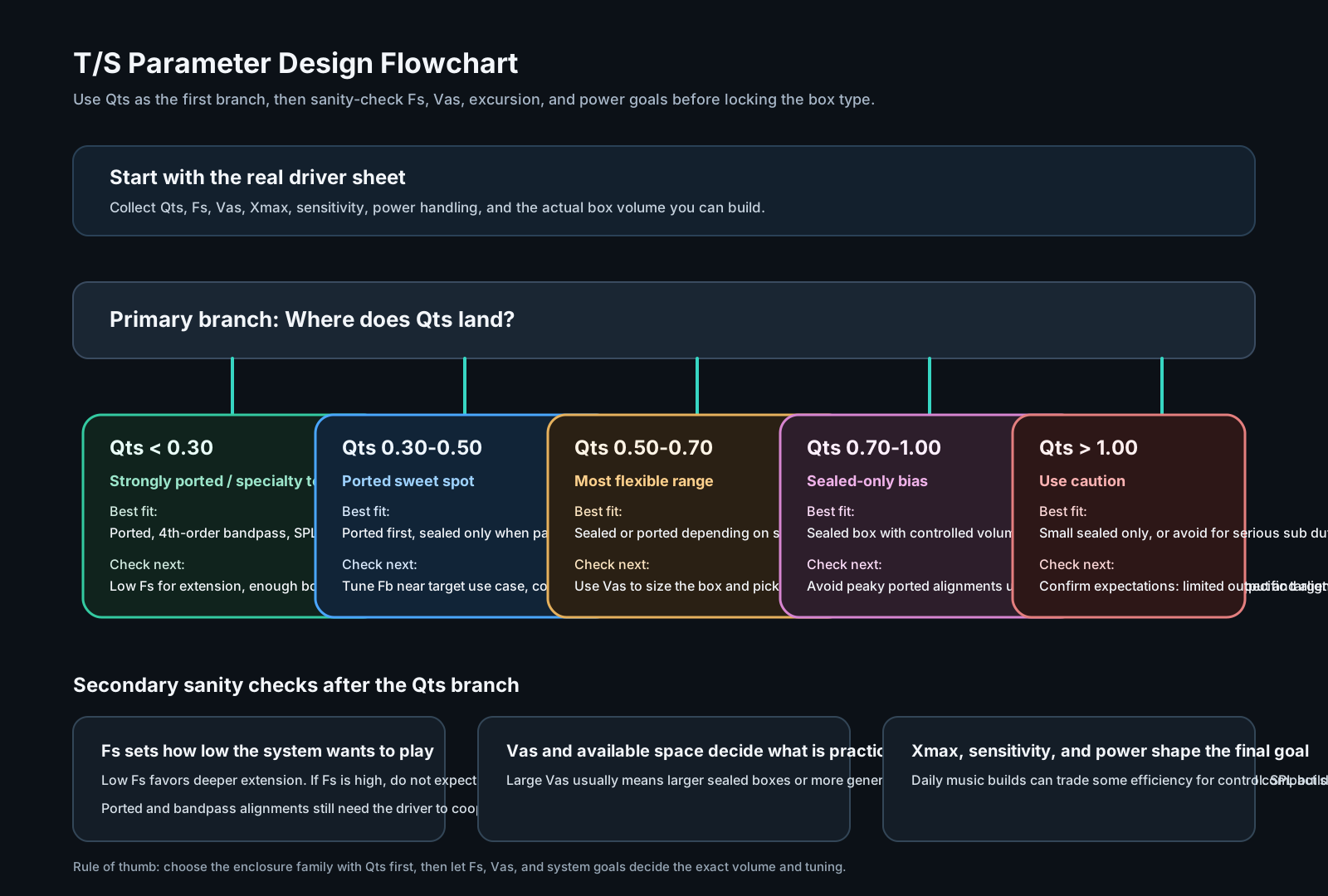
Qts determines the fundamental character of the driver and the enclosure type that will get the best from it:
Qts below 0.30: Highly damped. These drivers are designed for ported or bandpass enclosures. In a sealed box they produce less output and excessive damping — tight but thin. Think of competition-grade woofers and high-efficiency pro-audio subwoofers.
Qts 0.30–0.50: The ported sweet spot. In a properly tuned vented enclosure these drivers produce excellent extension and efficiency. Sealed works too — produces a higher Qtc but acceptable performance. Most "audiophile" subwoofers targeting music reproduction fall here.
Qts 0.50–0.70: Flexible. Either enclosure type works. Sealed produces a Qtc near 0.707 (Butterworth alignment) with moderate box volume. Ported works well too. Beginner-friendly territory — harder to go badly wrong.
Qts 0.70–1.0: Sealed only. Ported alignment becomes difficult — the driver's light damping combined with ported loading creates a peaked, one-note response. Sealed box air spring provides the additional damping needed. Common in budget subwoofers with lightweight motors.
Qts above 1.0: Sealed in small box. These drivers are effectively car speakers with heavy cones, not subwoofers. Performance as subwoofers is limited. Avoid for serious builds.
Matching Fs to Enclosure Tuning
The relationship between Fs and enclosure tuning determines frequency extension:
Sealed: System resonance Fc is always above Fs. The smaller the box, the higher Fc climbs. For deep bass extension: use a driver with low Fs (25–35 Hz) and a box large enough to keep Fc near Fs.
Ported: Port tuning frequency Fb is typically set to 0.7–1.0 × Fs. Setting Fb too far below Fs extends apparent bass but reduces output and increases excursion at Fb. Setting Fb equal to or above Fs maximizes efficiency but sacrifices deep bass extension.
Rule of thumb for music reproduction: Target Fc (sealed) or Fb (ported) at 35–45 Hz for full musical bass. Home theater and demo systems can target 25–35 Hz with appropriate power.
Rule of thumb for SPL competition: Fb = test frequency ± 2 Hz. Everything else is optimized around maximum output at that one frequency.
Sensitivity and Power Matching
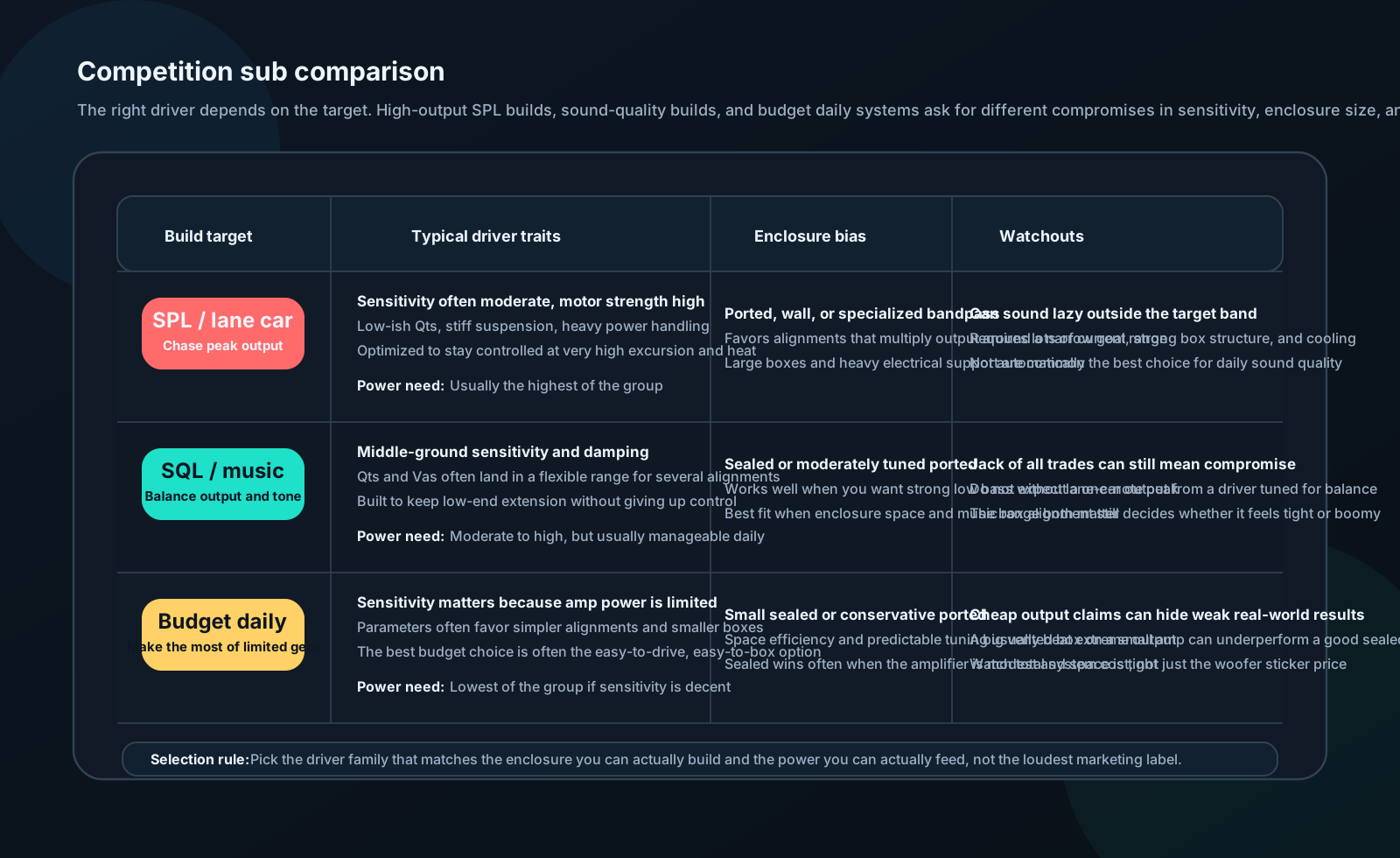
The power required to produce a target SPL is directly governed by sensitivity:
P_required = 10^((SPL_target - Sensitivity - 20×log(1/d)) / 10)
For a 12" driver with 87 dB sensitivity at 1W/1m, targeting 110 dB at 1 meter:
P = 10^((110 - 87) / 10) = 10^(2.3) = 200W
For a 12" driver with 92 dB sensitivity, same goal:
P = 10^((110 - 92) / 10) = 10^(1.8) = 63W
The 5 dB sensitivity advantage requires only 1/3 the power. This is why competition drivers optimize sensitivity aggressively, and why "400W RMS" doesn't mean "loud" if sensitivity is low.
Real-World Driver Recommendations by Category
These are example drivers as of early 2025. Always verify current specifications.
ENTRY LEVEL MUSIC (Qts 0.5–0.7, sealed or ported, $50–150):
Dayton Audio RSS315HF-4 — 12", Qts 0.51, Vas 3.54 ft³, 600W, $140
- Sweet spot for sealed 1.5–2.5 ft³, excellent sound quality per dollar
Rockford Fosgate P3D4-12 — 12" DVC 4Ω, Qts 0.59, Vas 1.25 ft³, 600W, $150
- Compact Vas works in small ported or sealed boxes
Kicker 44CWCS124 — 12", Qts 0.72, 600W, $120
- High Qts = sealed only, but sounds good in very small boxes
MID-RANGE SQ (Qts 0.4–0.6, music reproduction, $200–400):
JL Audio 12W3v3-4 — 12", Qts 0.456, Vas 1.377 ft³, 500W, $280
- Ported or sealed, excellent transient response, tight accurate bass
Image Dynamics IDMAX12 V4 — 12", Qts 0.49, Vas 2.65 ft³, 1000W, $380
- High power handling, very linear, ported optimal
Morel Ultimo 12 — 12", Qts 0.56, Vas 4.8 ft³, 1000W, $450
- Reference-grade, requires large sealed or ported enclosure
SPL COMPETITION (Qts 0.3–0.45, high sensitivity, high power, $200–800+):
Sundown Audio X-12 v2 — 12", Qts 0.39, Vas 1.68 ft³, 1500W, $350
- Ported 2.5–3.5 ft³ tuned 32–38 Hz, very high output
DC Audio Level 5 m3 — 12", Qts 0.42, 3500W, $550
- Competition-grade power handling, bandpass or large ported
Ascendant Audio Mayhem — 12", Qts 0.38, Vas 2.2 ft³, 2000W, $400
- SQL crossover — loud but still musical
ULTRA-COMPACT (Qts 0.6–0.8, very small sealed, $100–250):
JL Audio 10TW3-D4 — 10" shallow mount, Qts 0.69, Vas 0.613 ft³, 400W, $250
- Sealed 0.625 ft³ = perfect for under-seat
Rockford Fosgate P3SD4-10 — 10" shallow, Qts 0.77, Vas 0.65 ft³, 600W, $180
- Fits where standard drivers won't, sealed only
Pioneer TS-SW2502S4 — 10" shallow, Qts 0.83, 300W, $120
- Budget shallow mount, very small sealed boxes
COMPETITION SPL EXTREME (Qts 0.25–0.4, bandpass or massive ported, $500–2000+):
Crescendo Audio Forte — 15", Qts 0.35, 3000W+, $800
- Competition wall builds, very high Xmax, massive power handling
Fi Audio BTL — 18", Qts 0.38, 5000W continuous, $1200
- Extreme SPL, bandpass or 8+ ft³ ported, requires serious electrical
Sundown Audio Z v5 — 15", Qts 0.32, 2000W, $700
- "Daily-drivable" SPL — loud enough to compete, still sounds acceptable with music
Key takeaway: Match Qts to enclosure type first, then power handling to amplifier, then price to budget. A $150 driver in the correct enclosure outperforms a $400 driver in the wrong box.