🔧 INSTALLER LEVEL: Design and Tuning
Bandpass Enclosure Design — Chamber Ratios
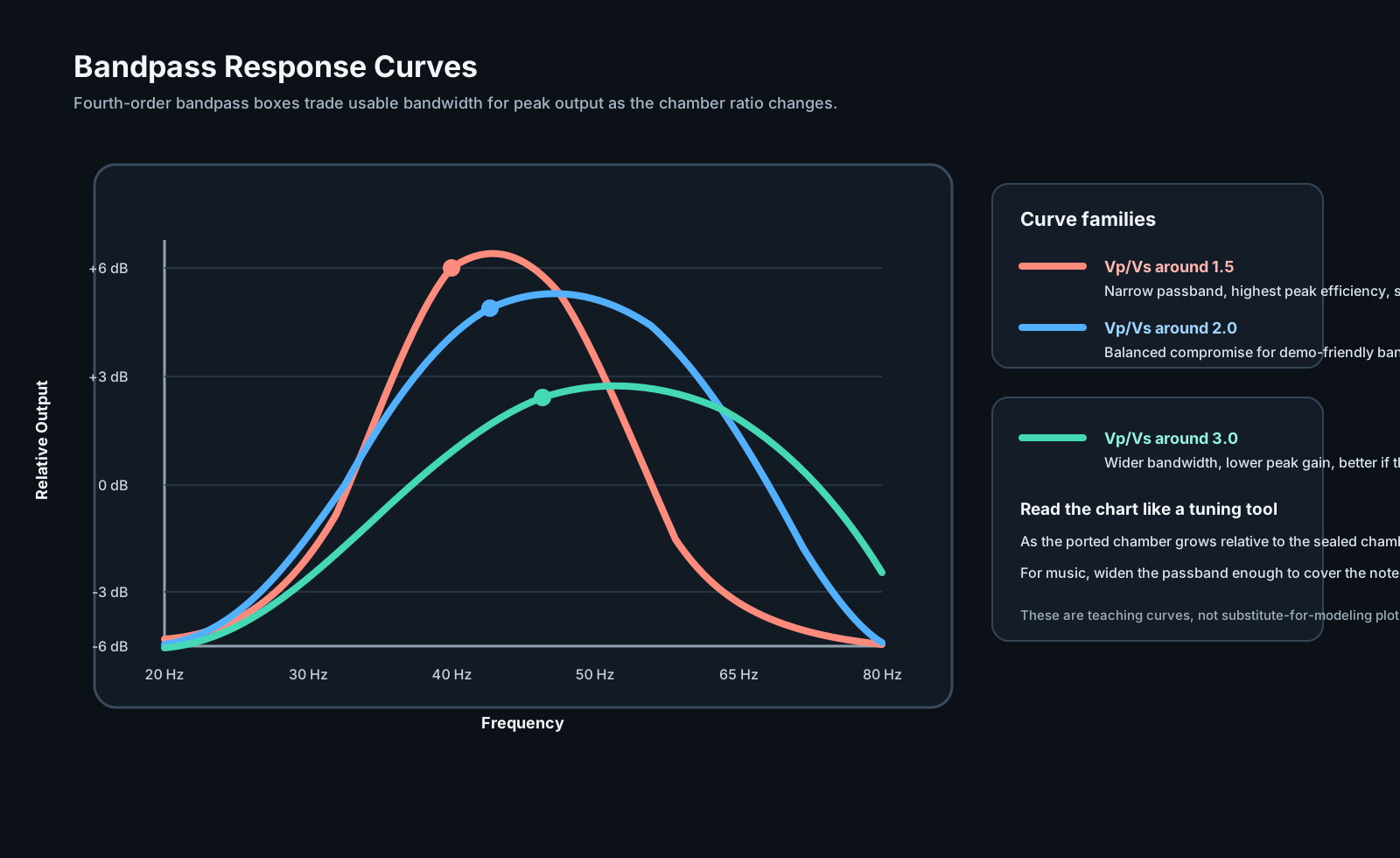
For a 4th-order bandpass (one sealed, one ported chamber):
Step 1: Sealed chamber volume
Vs = 0.7 × Vas
The sealed chamber controls the upper -3 dB point. Smaller Vs = higher upper cutoff. Larger Vs = lower upper cutoff, more output.
Step 2: Ported chamber volume
Vp = 1.5 to 3.0 × Vs
Larger Vp / Vs ratio = wider bandwidth but less peak efficiency.
Step 3: Port tuning
Tune port to the desired center frequency of the passband:
Fb = target_frequency ± 5 Hz
Calculate port length using the Helmholtz formula with Vp and target Fb.
Step 4: Verify bandwidth
Approximate passband (−3 dB points):
f_lower ≈ Fb × 0.7
f_upper ≈ Fc_sealed × 1.4
Where Fc_sealed is the sealed chamber resonance.
Adjust chamber ratio iteratively (or use WinISD's bandpass design mode) until bandwidth covers desired range.
Isobaric Design
The isobaric pair behaves as a single driver with:
Fs_iso = Fs × √2
Vas_iso = Vas / 2
Qts_iso = Qts (unchanged)
Wiring:
For push-push (both cones moving in same direction simultaneously): - Both drivers receive the same signal - Both voice coils must be wired in same polarity (both positive to same terminal) - Outer driver: positive terminal to amp positive - Inner driver: positive terminal to amp positive (reversed physical orientation means same acoustic polarity)
Physical arrangement:
Face-to-face: Magnet-out on both. Inner faces of cones touching or near-touching. Sealed air pocket between them = isobaric volume. Mount outer driver in enclosure baffle.
Magnet-to-magnet: Cones both facing outward. Sealed pocket at back. Less popular (larger depth required).
Enclosure calculation:
Use Vs_iso = 0.5 × Vas for sealed alignment. Calculate as normal sealed box using modified parameters.