🔰 BEGINNER LEVEL: Choosing the Right Subwoofer
Matching Subwoofer to Purpose
Walk into any car audio shop and you'll see subwoofers claiming everything from "earth-shattering bass" to "competition-winning output." None of that tells you which driver belongs in your build. What matters is matching the driver's physical characteristics to your enclosure, power, and goals.
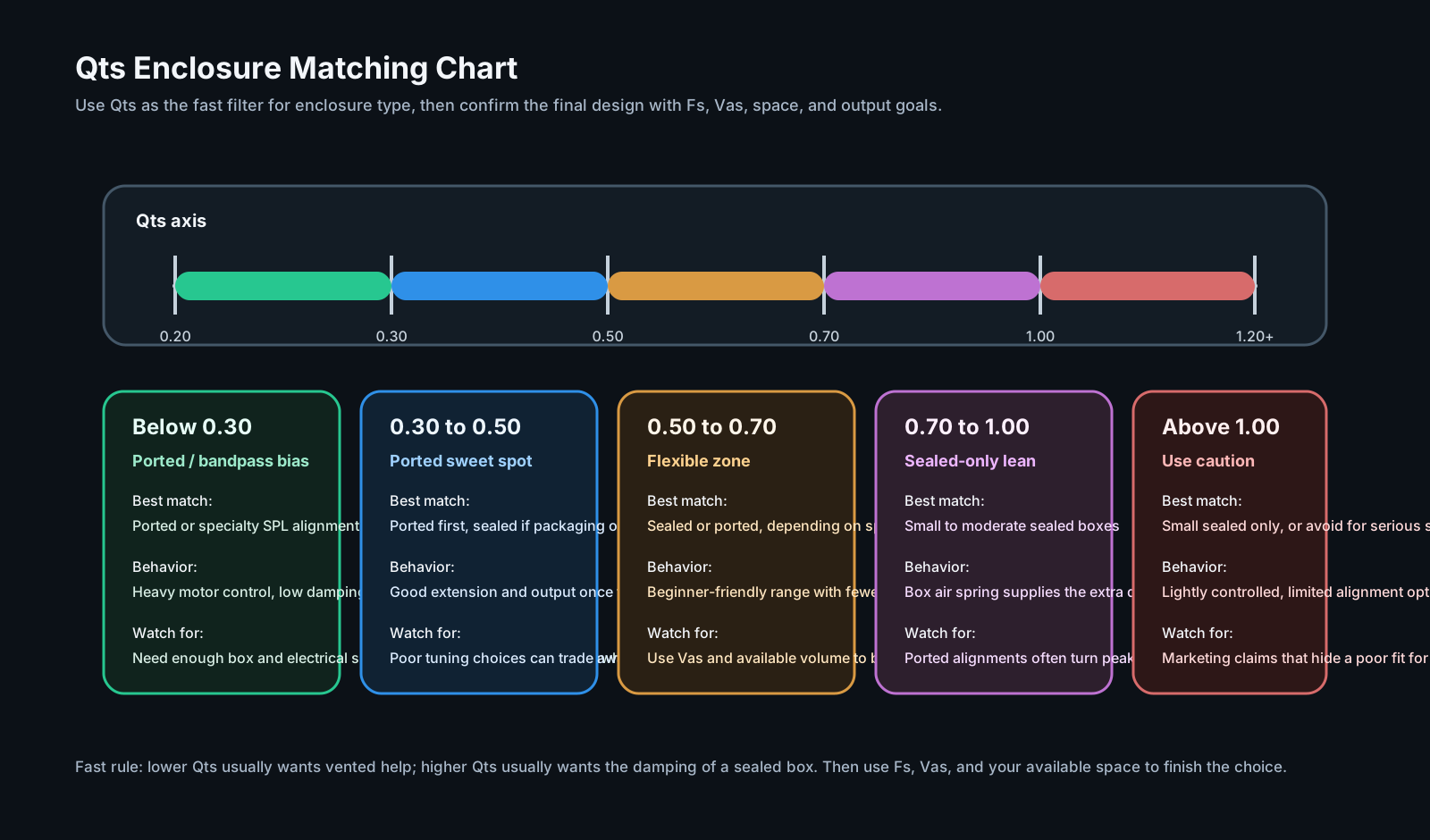
Three questions that guide every selection:
1. How much space do you have? A driver with small Vas (equivalent air compliance volume) works in a small box. A driver with large Vas needs a large box or performs poorly in a small one. If you have 1.5 cubic feet, check Vas before anything else.
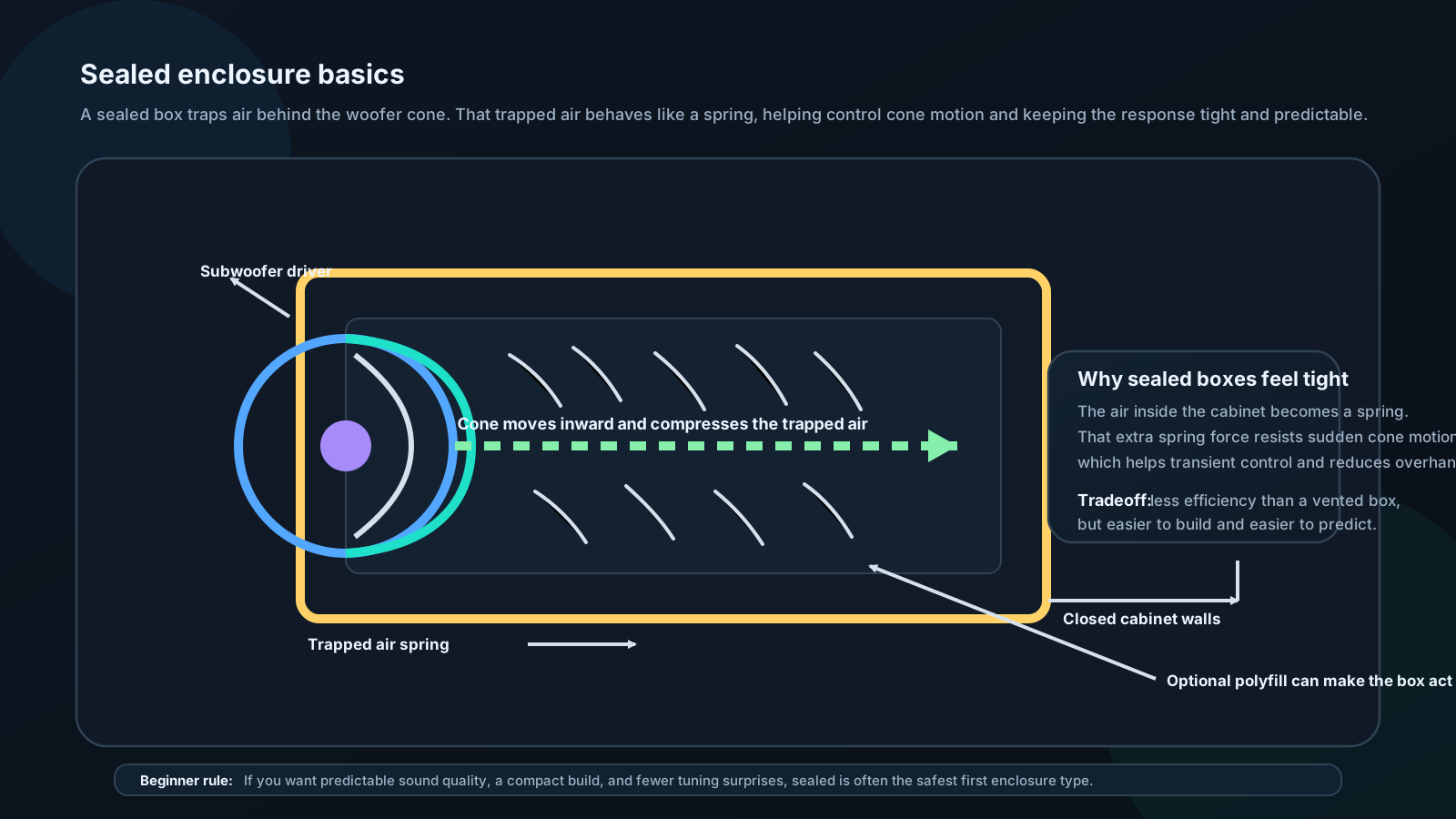
2. What do you want it to sound like? Tight, accurate bass for jazz and acoustic music → sealed enclosure, driver with moderate Qts (0.5–0.7). Maximum output and impact for EDM and hip-hop → ported, driver with lower Qts (0.3–0.5). Extreme competition SPL → bandpass, low Qts driver with high Xmax.
3. How much power do you have? Low-efficiency drivers (sensitivity below 86 dB) need significantly more power than high-efficiency ones (90+ dB). Sensitivity is set by the driver's physics — not the brand name on the dustcap.
Reading a Specification Sheet
Every reputable manufacturer publishes T/S parameters. Here's what each one means in plain language:
Fs (free-air resonance): The frequency the driver naturally wants to resonate at when suspended in free air. Lower Fs → can play lower notes more naturally. Typical subwoofer range: 20–50 Hz.
Qts (total Q factor): How well-damped the driver is. Low Qts (0.3) = heavily damped, needs the port to develop output. High Qts (0.8) = lightly damped, sealed box provides the extra damping needed. The single most important parameter for enclosure matching.
Vas (equivalent compliance volume): How stiff the suspension is, expressed as a volume of air with the same compliance. Large Vas = soft suspension = needs large enclosure or ported loading.
Xmax (maximum linear excursion): How far the cone can travel each direction while remaining linear. Xmax of 15 mm means ±15 mm of linear stroke. Beyond Xmax, distortion climbs rapidly.
Sensitivity: Output in dB at 1 watt measured at 1 meter. Every 3 dB difference requires double the power to compensate. A 90 dB driver needs 2× the power of a 93 dB driver to produce the same output.
Power handling: The maximum continuous power the driver can absorb without thermal damage. Treat this as a maximum, not a target — most drivers play well at 50–70% of rated power.
Common Mistakes in Driver Selection
Choosing by wattage: "This one is rated 2000W so it must be better" — wattage tells you thermal limits, not sound quality or output efficiency.
Ignoring box requirements on the product page: Most manufacturers specify minimum and maximum enclosure volumes. Using a driver in an enclosure outside its specified range produces poor results regardless of how much power you apply.
Misreading DVC impedance: A "2-ohm DVC" subwoofer has two coils each rated 2Ω. Wire coils in parallel = 1Ω total. Wire in series = 4Ω total. The "2-ohm" label does not mean the final impedance is 2Ω.