
5.6 Remote Start, Security, and Smart Vehicle Integration
🔰 BEGINNER LEVEL: Remote Start Basics
What Remote Start Does
Remote start allows you to start the vehicle's engine from a distance — typically via key fob or smartphone app — without physically being in the car. Benefits:
- Climate pre-conditioning: Car warm in winter, cool in summer before you enter
- Engine warm-up: Less wear on engine (debated but popular)
- Security perception: Can appear to be occupied
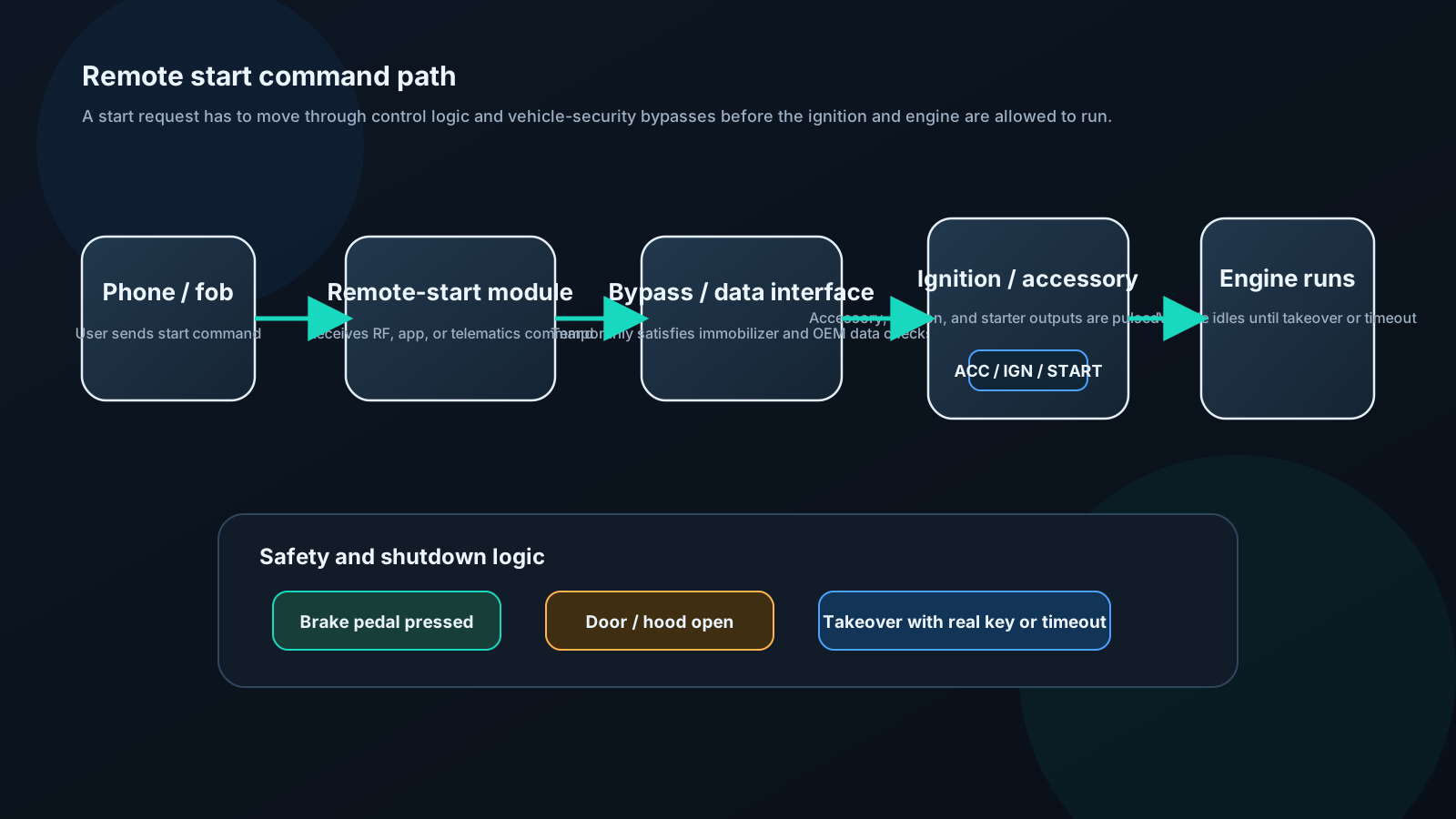
How it works (simplified):
- User sends start command (key fob, app)
- Remote start module receives command
- Module simulates key being turned: supplies power to ignition circuits
- Engine starts and runs without key present
- Safety systems engaged: Cannot put in drive without physical key
Safety interlocks are critical. A properly installed remote start system: - Immediately shuts off if brake pedal pressed (driver interlock) - Shuts off if clutch not depressed before engaging (manual transmission) - Does not override parking brake requirement - Shuts off after programmed run time (typically 10–30 minutes) - Will not start if hood is open (tamper interlock)
Selecting a Remote Start System
Stand-alone fob systems:
- Range: 500 ft to 1 mile depending on system
- No recurring subscription
- Start/lock/unlock/trunk release from fob
- Brands: Directed Electronics (Viper), Compustar, Python, DEI
Smartphone-integrated (telematic) systems:
- Range: Unlimited (cellular)
- Monthly subscription typically required ($3–15/month)
- iPhone and Android app
- GPS tracking included
- Real-time vehicle status (engine on/off, location)
- Brands: Drone Mobile, Compustar DroneMobile, Viper SmartStart
OEM integration:
Many modern vehicles offer factory remote start from the manufacturer (Ram, Chevy, Ford FordPass). Range varies; basic functionality. Some activate through the same app as vehicle status monitoring.
Security Systems
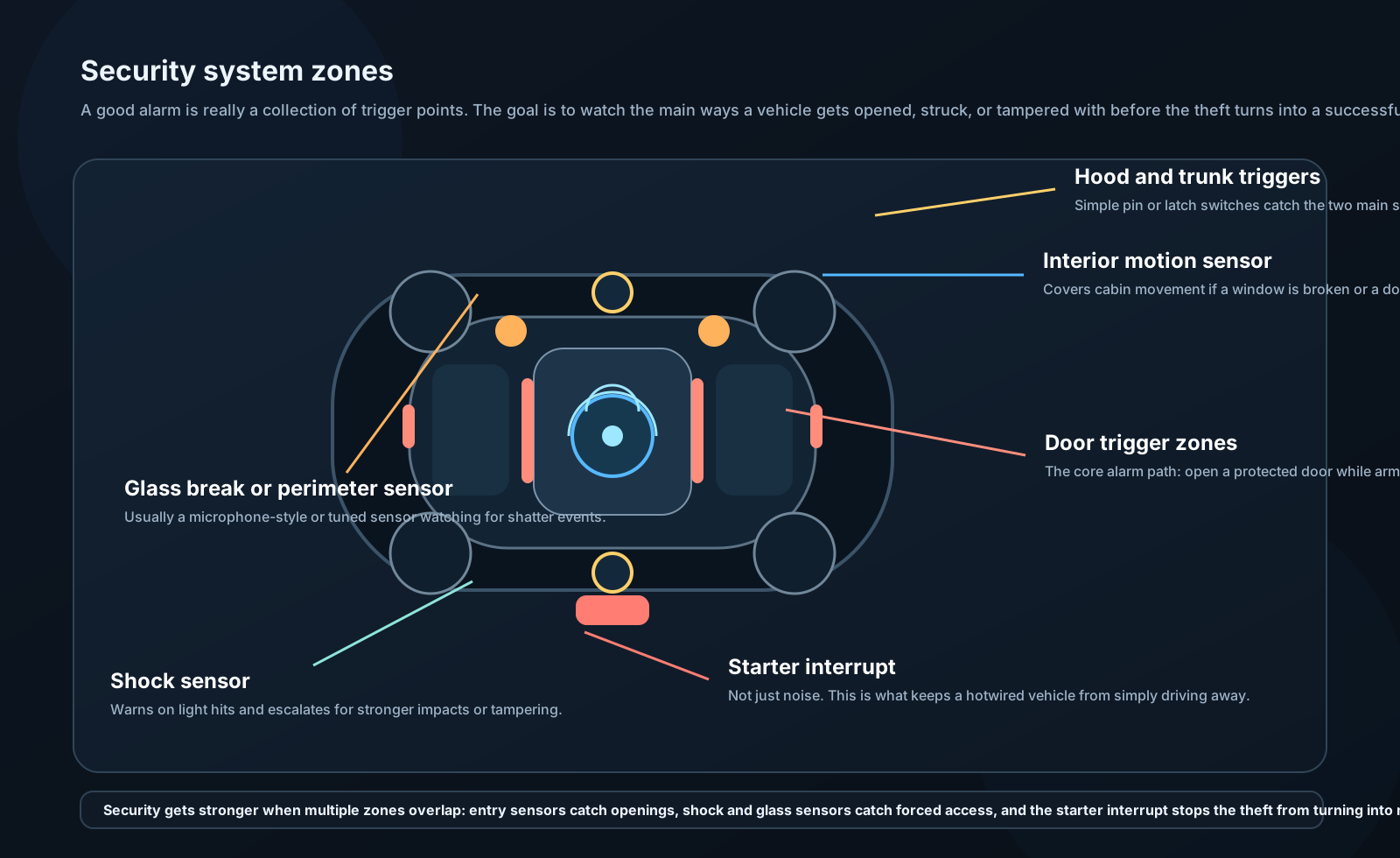
Why aftermarket security:
Factory security systems (if present) are basic — typically just door lock/unlock with alarm on forced entry. They don't provide:
- Starter interrupt (kill switch)
- Smartphone notification and GPS tracking
- Glass break or shock sensing
- Two-way confirmation of armed state
- Remote control via app
Basic security components:
Siren: External siren louder than factory horn. Discourages tampering. Direct-wired so it can't be easily disabled.
Shock sensor: Detects impact to vehicle. Two-stage: warning chirp for minor (cart ding), full alarm for major (attempted break-in).
Door trigger: When door opens while armed, triggers alarm. Uses factory door pin switches.
Ignition disable: Relay cuts ignition or fuel pump circuit. Even if thief hotwires, car won't start without disarming.
Glass break sensor: Microphone tuned to glass-breaking frequency. Triggers alarm if window shattered.
🔧 INSTALLER LEVEL: Installation and Bypass Modules
Bypass Module Selection

Modern vehicles have immobilizers (transponder keys, push-button start). The vehicle ECU verifies a chip in the key before allowing the engine to start. Remote start doesn't have this chip.
Bypass module tricks the immobilizer by: - Storing the key's transponder signal when programmed - Presenting this stored signal to the immobilizer when remote start activates - Releasing control back to physical key when driver enters
Brand matching:
Bypass modules are often brand and module specific:
- iDatalink / Fortin modules work with multiple remote start brands
- Directed Xpresskit (DEI) — designed for Directed/Viper systems
- CompuStar T-Harness — plug-and-play for supported vehicles
Always use a vehicle-specific harness when available. These plug directly into the factory connectors without cutting wires. Non-destructive, fully reversible.
Programming bypass:
Most bypass modules require an initial programming procedure: 1. Place physical key near bypass module antenna (3–5 seconds) 2. Module reads transponder signal and stores it 3. Verify: Start vehicle with stored signal (remote start test) 4. On success, module is ready
Alarm Zone Wiring
Door trigger wiring:
Most vehicles have a "door pin switch" circuit — a wire that goes to ground when any door opens (triggers dome light). Connect this to the alarm module's "door input" terminal.
Some vehicles use a positive-pulse door signal. Check with voltmeter: does voltage go up or down when door opens?
Hood pin:
Simple normally-closed switch. When hood closed: circuit closed. When hood open: circuit opens. Connect to alarm hood input. Alarm triggers if hood opened while armed.
Shock sensor calibration:
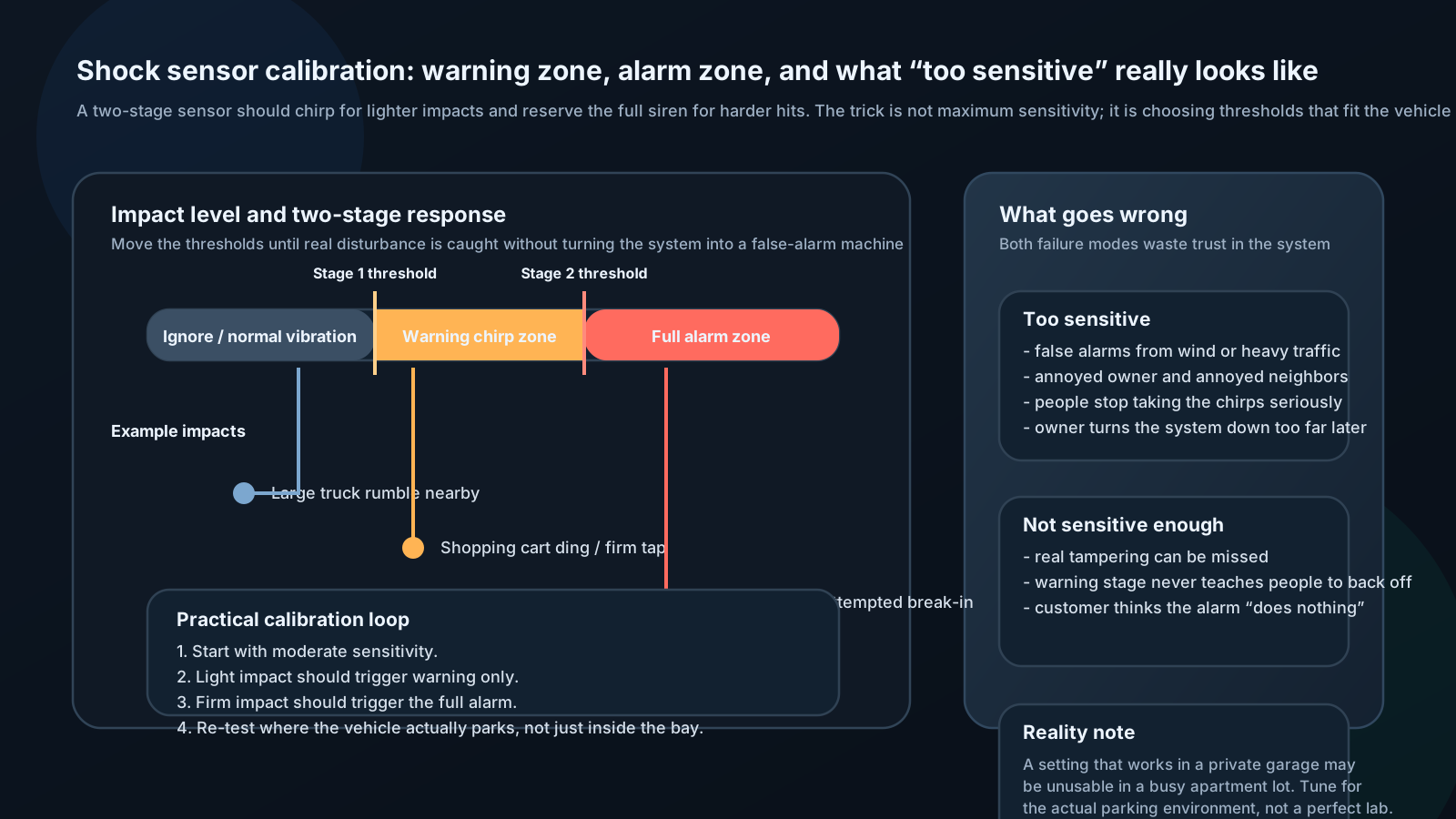
Two-stage shock sensors have two sensitivity levels: - Stage 1 (warning): Light impact → single chirp warning, no full alarm - Stage 2 (alarm): Hard impact → full alarm
Calibration procedure: 1. Install with moderate sensitivity 2. Tap vehicle lightly — should trigger Stage 1 only 3. Tap firmly — should trigger Stage 2 4. If too sensitive: false alarms from wind, large trucks passing 5. If not sensitive enough: Miss actual tampering
Field-tune in the actual parking environment — a sensitive setting appropriate for a garage may be inappropriate for a busy parking lot.
Telematic Systems and GPS Tracking
GPS receiver:
Module receives GPS position from satellites (L1 frequency, 1575.42 MHz). Accuracy: 2–5 meters horizontal with good sky view.
Cellular modem:
Sends GPS coordinates and vehicle status to server. Uses 4G LTE (most modern systems). Communication: AES-encrypted HTTPS to manufacturer's cloud server.
Vehicle interface:
- Reads ignition status (on/off)
- Controls remote start and security
- Some units read OBD-II data (speed, engine status)
- Some can control specific vehicle functions via CAN Bus
Geofencing:
Define a geographic boundary on a map. System alerts when vehicle leaves or enters the zone. Useful for: - Teen driver monitoring - Fleet management - Theft detection (notification if vehicle moves while parked)
Subscription economics:
Most telematic systems charge $3–15/month for cloud service and cellular connectivity. Over 5 years: $180–$900. Evaluate whether features justify cost for your use case.
For theft recovery specifically: Consider that a GPS unit with tracking costs ~$200 installed + subscription. Compare to comprehensive insurance deductible. For high-value vehicles, the math often works.
⚙️ ENGINEER LEVEL: Immobilizer Theory and Security Analysis
Transponder Key Systems
Passive RFID transponder in key:
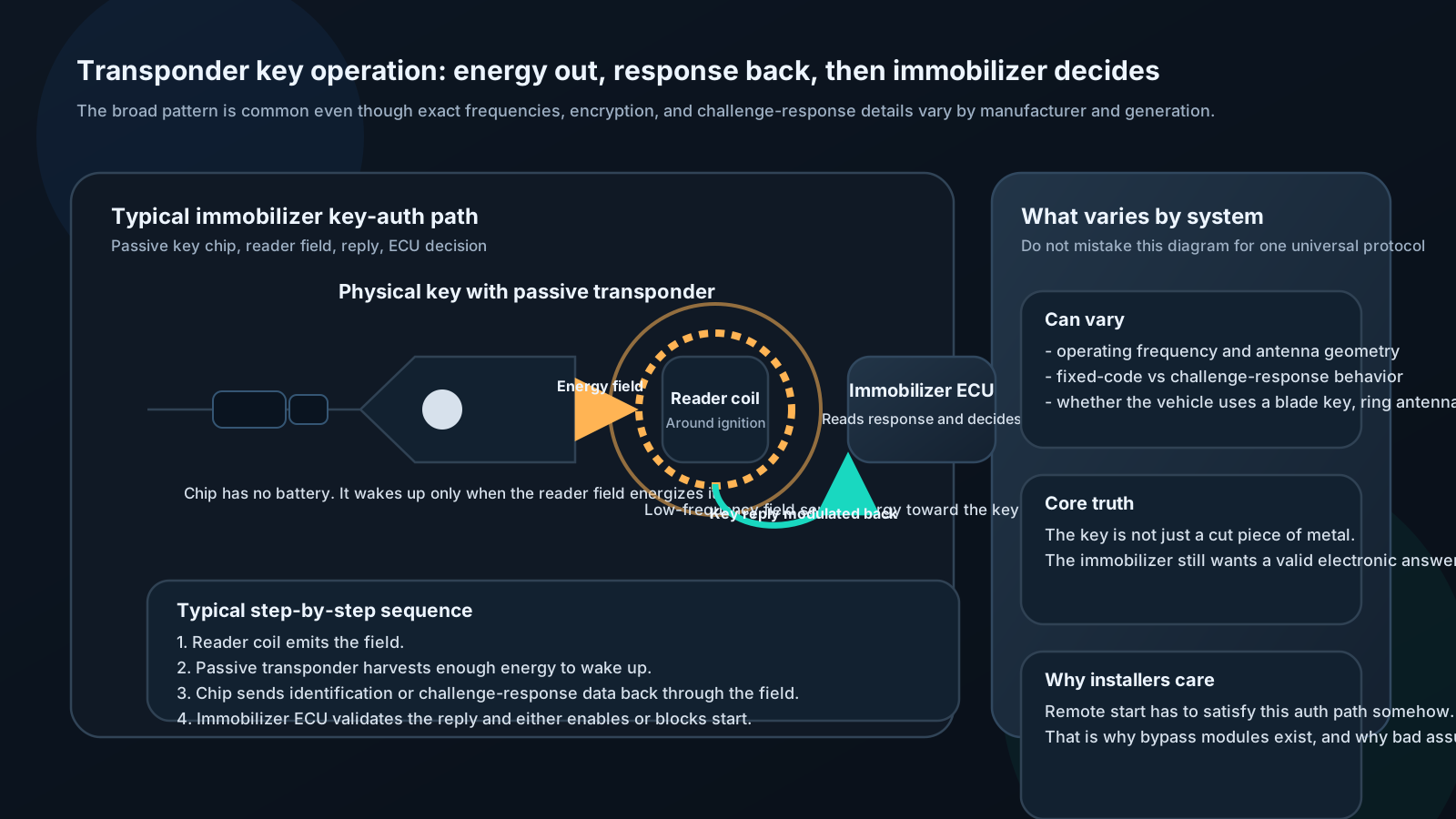
The key contains a passive RFID transponder (no battery). When inserted into ignition:
- Ignition cylinder antenna transmits RF field (~125 kHz)
- Transponder coil harvests energy from field
- Transponder chip modulates a response onto the field
- Response encodes unique ID (crypto challenge in modern systems)
- Immobilizer ECU verifies response
- If match: enables start. If no match: ignition locked out
Key types by encryption:
| Type | Era | Example | Security Level |
|---|---|---|---|
| Fixed code | 1990s | Early Toyota, GM | Low — cloneable |
| Rolling code | 2000s | Texas Instruments DST | Medium |
| Crypto challenge | 2010s | Megamos, Hitag Pro | High |
| UHF + RF | Current | BMW CAS, Mercedes EIS | Very High |
Modern crypto challenge:
ECU generates random 128-bit challenge Transponder encrypts with stored key using AES-128 ECU verifies response Correct response: 1 in 2^128 probability for attacker
Bypass module approach:
For legitimate remote start, bypass modules store the transponder challenge-response pairs during programming. This is a legitimate use — but the technology that enables it also enables key cloning by thieves with specialized equipment.
Relay attack (modern keyless entry theft):
Does not apply to traditional transponder keys, but relevant for proximity key systems:
- Thief A stands near house (near key on hook or counter)
- Thief B stands near car
- Amplifier pair between A and B extends key's range
- Car thinks key is present → unlocks and starts
- Requires specialized relay hardware ($100–200 on dark web)
Countermeasures:
- Faraday cage key storage (metal box, RFID-blocking pouch)
- Add traditional steering wheel lock
- Disable proximity unlock in vehicle settings (some vehicles)
- Park in garage
Security System Weaknesses
Academic exercise only — understanding vulnerabilities to understand why professional installation matters.
Siren jamming:
Cheap sirens have poor quality piezoelectric elements. Hitting the vehicle forces the siren into protection mode. Professional sirens use backup power and self-monitoring.
Field injection attack:
Sophisticated equipment can inject signals onto OBD port to override alarm states. Countermeasure: Alarm module not OBD-accessible, physical port locks.
Door pin switch defeat:
Accessing interior through sunroof or quarter window may not trigger door triggers. Countermeasure: Multiple sensor types — shock + motion + door, so defeating one doesn't defeat all.
Remote signal jamming:
Handheld jammers prevent remote lock command from reaching vehicle. Thief waits for you to walk away without noticing car didn't lock. Countermeasure: Two-way confirmation fob (chirps/flashes when successfully armed). Always verify visual confirmation of lock.
Physical security remains paramount. No electronic system defeats a thief with adequate time, tools, and motivation. Electronic systems add friction that encourages thieves to choose easier targets.
END OF CHAPTER 5
Chapter 5 Statistics: - Word count: ~12,400 words - Page equivalent: ~25 pages - Sections: 6 of 6 complete ✅ - Three-tier structure: ✅ Throughout - Supporting visuals continue in linked reference assets