
🔰 BEGINNER LEVEL: Understanding Digital Audio
How Digital Audio Works
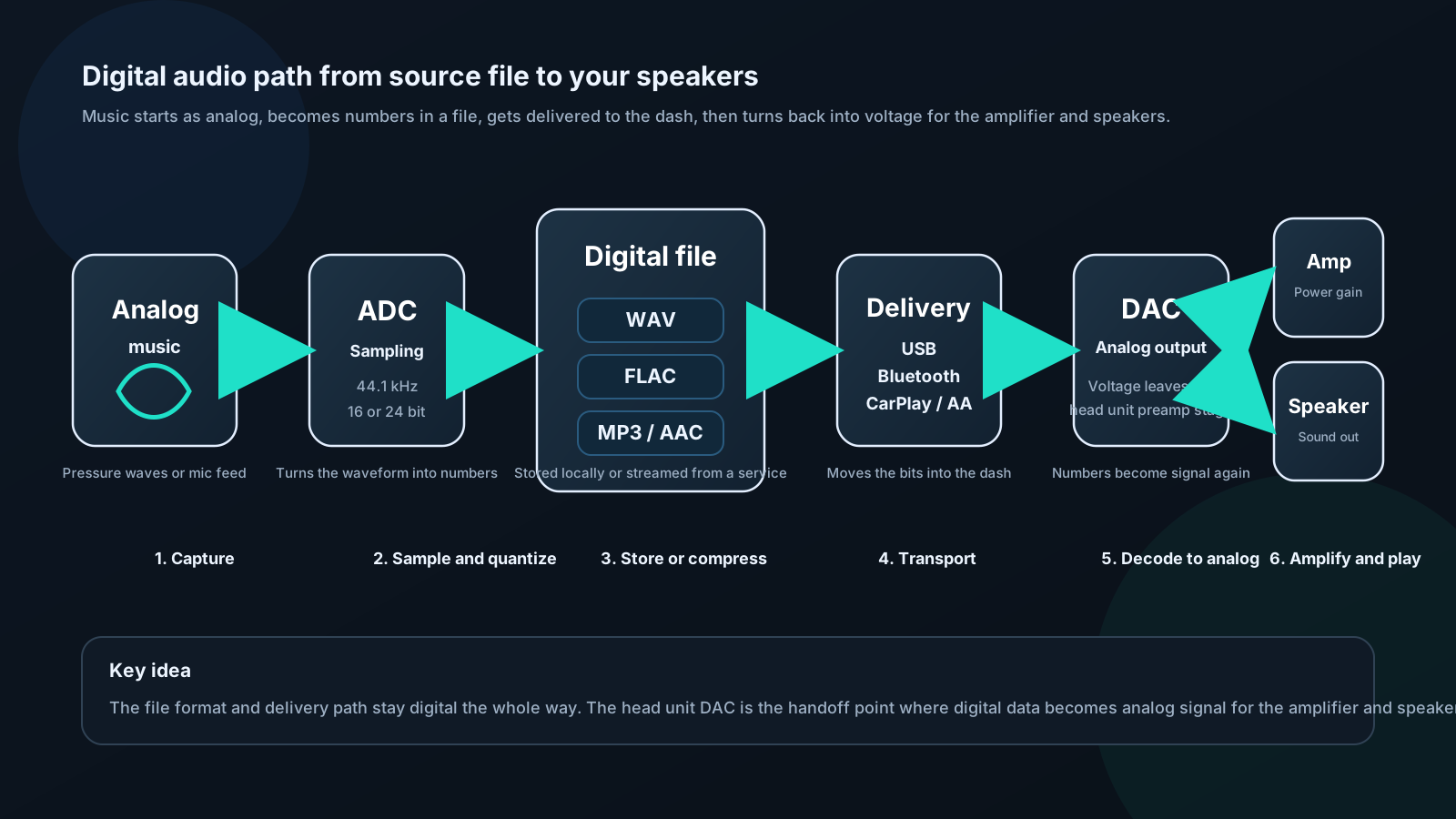
Sound in the real world is analog — continuous pressure waves. Digital audio converts these waves to numbers:
Sampling: Measure the wave amplitude at regular intervals. Sample rate: How often we measure. 44,100 times per second (44.1 kHz) for CD quality. Bit depth: How precisely we measure each sample. 16-bit = 65,536 possible amplitude values.
Nyquist theorem tells us we can accurately capture frequencies up to half the sample rate. At 44.1 kHz sample rate: captures up to 22.05 kHz. Human hearing tops out at 20 kHz. CD quality is exactly adequate for human hearing.
Bit depth and dynamic range:
Dynamic Range (dB) ≈ 6.02 × N
16-bit CD: 96 dB dynamic range 24-bit high-res: 144 dB dynamic range
Human hearing dynamic range: ~120 dB (threshold of hearing to pain) 16-bit: Technically insufficient — but in practice, with dithering, 16-bit sounds excellent for music.
Lossy vs Lossless Formats
Lossless (every bit preserved):
- WAV: Uncompressed. Exact copy of original digital audio. Large files (~10 MB/minute).
- FLAC: Lossless compression. Typically 50–60% of WAV size. Identical audio quality to WAV. Best choice for archival.
- ALAC: Apple's lossless. Same quality as FLAC, .m4a extension. Better Apple ecosystem support.
- AIFF: Apple's uncompressed. Like WAV, large files.
Lossy (some data discarded):
- MP3: Most universal format. 128–320 kbps. Adequate at 256 kbps+.
- AAC: Better quality than MP3 at same bitrate. Used by Apple Music, YouTube.
- Ogg Vorbis: Used by Spotify. Open standard, good quality.
- Opus: Very efficient at low bitrates. Emerging format.
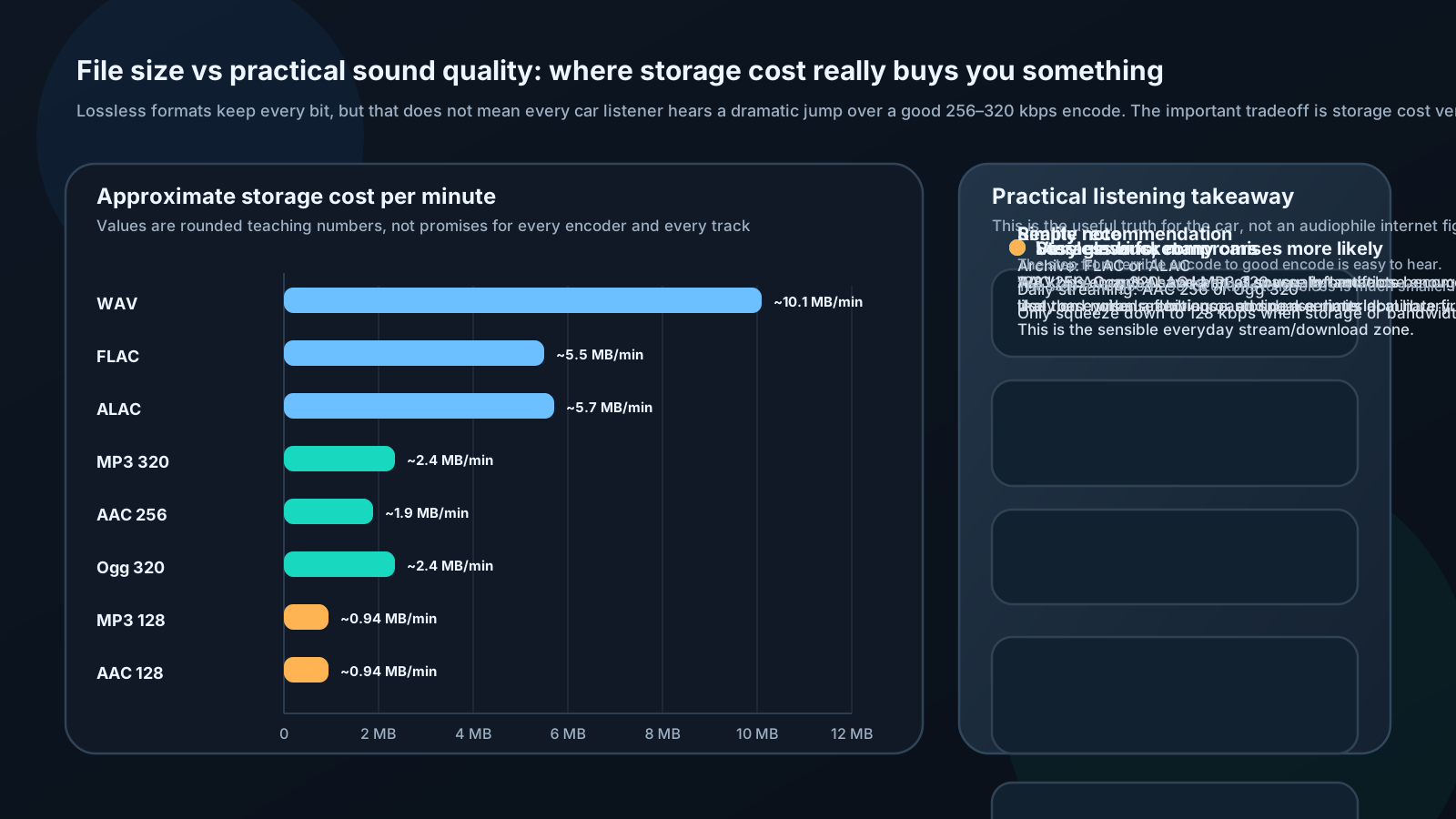
Which format should you use?
For ripping CDs or archiving music: FLAC. Lossless, compressed, universally supported by car audio head units that support lossless.
For daily streaming: AAC 256 kbps (Apple Music) or Ogg Vorbis 320 kbps (Spotify Premium). Effectively transparent for most listening.
For high-end SQ systems: FLAC or ALAC stored locally on USB drive. Eliminates streaming compression and Wi-Fi/cellular reliability.
What "Hi-Res Audio" Actually Means
You'll see labels like "24-bit/192kHz," "Hi-Res," and "MQA" on streaming services and head unit marketing. Here's the honest picture:
24-bit audio: More dynamic range than 16-bit. The additional dynamic range (144 dB vs 96 dB) exists mostly below the noise floor of real-world listening rooms and above the threshold of pain — neither region is used. However, 24-bit during recording provides headroom that helps; 24-bit playback provides minimal real-world benefit over 16-bit with dithering.
192 kHz sample rate: Captures frequencies up to 96 kHz. No human can hear above 20 kHz. The benefit claimed is "better transient response" — measurable, but no controlled study has shown audibility in blind tests.
MQA (Master Quality Authenticated): Tidal's format. Controversial — it's a lossy codec that packages high-resolution content in a smaller file and claims to authenticate studio masters. Sound quality is excellent but not technically lossless. Supported on some high-end car head units.
Practical position: 16-bit/44.1 kHz FLAC or AAC 256 kbps is transparent for all but the most exceptional listeners in ideal conditions. "Hi-Res" formats are not wasted money but not transformative in a car environment with road noise, reflections, and typical listening distance.