🔰 BEGINNER LEVEL: What SPL Competition Is
Understanding dB Drag Racing
SPL (Sound Pressure Level) competition is simple in concept: play a test tone, measure peak SPL with a calibrated meter, highest number wins. The execution, however, is extraordinarily complex engineering.
The format:
- Test frequency: Typically 40 Hz, 50 Hz, or 63 Hz (organization-specific)
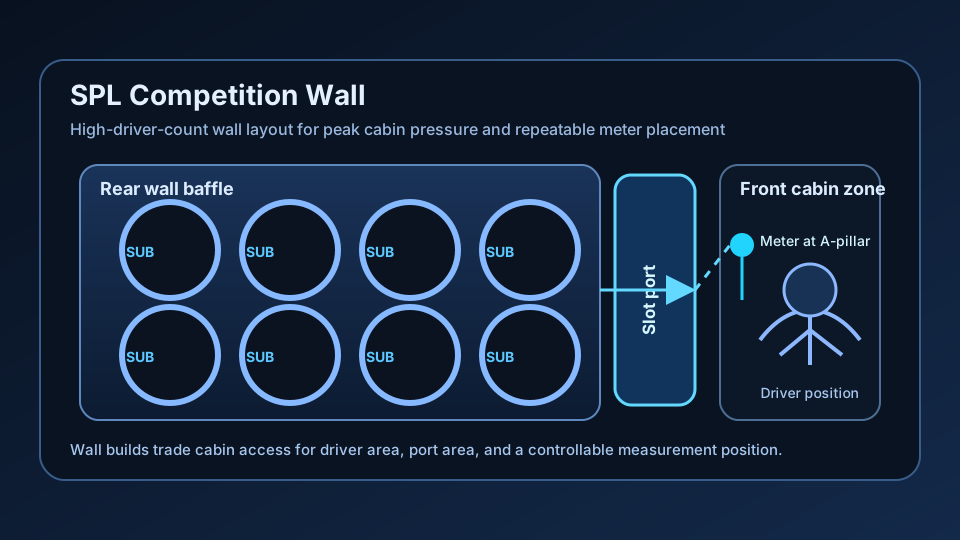
- Measurement device: TermLab meter positioned at driver's A-pillar
- Duration: 30 seconds maximum for measurement (many competitors "burp" for 10-15 seconds)
- Vehicle condition: Windows and doors closed, vents sealed
- Classes: Organized by vehicle type, power level, driver position, and other factors
What makes it extreme:
Championship SPL vehicles produce 170+ dB — louder than a jet engine at takeoff (140 dB), louder than a gunshot (160 dB). These levels require:
- 10,000–100,000+ watts of amplifier power
- 4–24+ subwoofer drivers in a wall configuration
- Massive electrical systems (multiple alternators, battery banks)
- Significant vehicle structural modifications
Why People Compete
Not for music listening. A vehicle optimized for 170 dB at 50 Hz sounds terrible with actual music. These are purpose-built demonstration machines.
Motivations: - Engineering challenge (pushing physical limits) - Community and camaraderie (tight-knit competition scene) - Brand representation (sponsored competitors) - Bragging rights (world record holders)
Entry-level SPL (140–150 dB range) is achievable with $3,000–5,000 and moderate modifications. This is where most hobbyists start.
Championship SPL (165+ dB) requires $20,000–150,000+ in equipment and extensive fabrication. This is professional-level commitment.